layout: post
title: "MMORPG: Start small?"
created: 1065737148
categories:
Game
Being serious about this idea, I’ve gone and contacted my guys at EA. It turns out one is now at Microsoft and the other is doing his MBA.
The two pointed out the obvious difficulty in starting an MMORPG from scratch.
That brought up the obvious - why not start a Mud, and grow it into an MMORPG over time?
We get the software infrastructure up and running as a Mud, and gradually roll out the features and innovations that depart from a Mud and turn into a real MMORPG game engine (not graphics engine). It could even depart from a Telnet interface, and replaced with something akin to a really Spartan 2D interface, something sufficient to make it an MMORPG and demonstrate it to potential investors.
At that point we begin the fundraising drive, incorporate, print stock on toilet paper leafs and pay people in shares. ;)
Thoughts? Sorry for using so much blog space Boris. Is this OK?
layout: post
title: Most companies never change direction until they hit the wall
created: 1084864653
categories:
Web Development
We’re still clearly in a transition phase, where more and more companies will join the bandwagon, but it’s interesting to see the raise of the negative effects of sticking with bad habits vs. the benefits of adopting new rules as a driver for the adoption of web standards. Most companies never change direction until they hit the wall, as do many politicians who lack vision. It seems like a common trait of human nature.
padawan.info: Negative effects of crap code as a driver for web standards
In 2009, Portio Research counted the global value of ‘non messaging’ premium content (music, gaming, news, etc) downloaded or consumed on phones and sold to them worldwide, to be worth 85 Billion dollars. Yes, 250 times bigger opportunity for any content owner like say a Disney or TimeWarner or Turner etc to make money today, on ALL phones, not those few iPhones that are in pockets of some 4% of Americans and less than half of one percent of the rest of the world. Understand how enormous this number is. Just ‘premium’ mobile data income (I am excluding messaging) is bigger than ALL internet content revenues, and all internet advertising income - added together! (Morgan Stanley said they totalled 64B dollars in 2009). Mobile content alone, is worth more than all global cinema box office revenues, and all global videogaming industry software income, and all global music industry income - PUT TOGETHER. Again? Mobile data paid content industry is bigger that music, hollywood and videogames, all added together. Its that big. And some crazy journalists count free downloads on App Stores and think this is the mobile data opportunity for the industry. Now in our zoo we are obsessing about the standard field mouse rather than the elephant.
But even this is not the real comparison. I just said, that Portio measured ‘non messaging’ premium content revenues for mobile. What of the total mobile data industry? It is now worth over 284 BILLION dollars globally, including messaging income (says Morgan Stanley). Thats 825 times bigger in value than all apps stores. Its not mouse to an elephant in our zoo, it is focusing on the ant and ignoring the elephant.
I kept trying to figure out different parts of Tomi’s article to quote, and realized I was selecting the whole thing. You really do need to read the whole thing to understand where the mobile industry is today (and it is gigantic).
However, I think Tomi (who is fantastically smart and knowledgeable about the global mobile telecoms industry) is missing where this is all heading. I saw the same thing happen at Nortel when the bitheads (me and other people in the IP everywhere camp - death of scarcity) bumped into the bellheads (telecoms thinking, more similarities to railroads, supply & demand).
App stores are small from a global perspective, from a total industry perspective, even though on a micro scale many individual developers and services are making millions of dollars. It is, however, an Internet based business. There is flat ground in all directions, and anyone can build there. There are no bottlenecks, there are no checkpoints or speed traps to slow you down (aka mobile operators, government regulation, or even worse, government-run mobile operators).
The future is not mobile telecoms, which is the picture that Tomi paints today. The future is Internet + identity + payment, and app stores will figure heavily in that future.
But, if you can figure out a way to sell into the GIGANTIC mobile telecoms market today - go do it, just focus on the Internet end goal that I believe is inevitable.
I don’t know logic
But I know truth
I don’t know algebra
But I can draw a line
I don’t know calculus
But I know how to drive
I don’t know probability
But I know how to gamble
I don’t know graph theory
But I know who you offended last week
I don’t know knot theory
But I can tie my shoelaces
I don’t know category theory
But I know that a book is sometimes something you read and sometimes a doorstep
# Source global definitions
if [ -f /etc/bashrc ]; then
    . /etc/bashrc
fi

# Prompt
LightBlue='\[\e[01;38;5;74m\]'
Grey='\[\e[0;37m\]'
White='\[\e[0;97m\]'
PS1="$LightBlue\u@\h $Grey\w $LightBlue\$ $White"

# History search
bind '"\e[A":history-search-backward'
bind '"\e[B":history-search-forward'

### History append rather than overwrite
# don't put duplicate lines or lines starting with space in the history.
HISTCONTROL=ignoreboth

# append to the history file, don't overwrite it
shopt -s histappend
PROMPT_COMMAND="history -a;$PROMPT_COMMAND"
# attempt to save all lines of a multiple-line command in the same history entry
shopt -s cmdhist
# save multi-line commands to the history with embedded newlines
shopt -s lithist

# Store always & everything.
# From http://jesrui.sdf-eu.org/remember-all-your-bash-history-forever.html
#HISTSIZE=10000
#HISTFILESIZE=20000
HISTSIZE=-1
HISTFILESIZE="no truncation (if not numeric)"
#Ignore 1-char cmds
HISTIGNORE=?:?


### Color manpages (Arch style)
export LESS_TERMCAP_mb=$'\E[01;31m'
export LESS_TERMCAP_md=$'\E[01;38;5;74m'
export LESS_TERMCAP_me=$'\E[0m'
export LESS_TERMCAP_se=$'\E[0m'
export LESS_TERMCAP_so=$'\E[38;5;246m'
export LESS_TERMCAP_ue=$'\E[0m'
export LESS_TERMCAP_us=$'\E[04;38;5;146m'

### Color common commands
alias ls='ls --color=auto'
alias grep='grep --color=auto'
#########################
Root dir for PyPi server.
#########################
:maintainer: konstantinos.anagnostopoulos@ext.jrc.ec.europa.eu (ankostis@gmail.com)
:created:   2014-Sept

This is a PyPI compatible package index server :https://pypi.python.org/pypi/pypiserver


Folder contents
===============
There should be these in the ``pypi-server``'s home-dir::

    +--packages/                    ## Uploaded/mirrored python-packages stored there.
    +--venv-3/                      ## Virtual-environement that the pypi-server runs under.
        +--lib/python3.4/site-packages/pypiserver/_app.py       ## Has the Welcome message.
    +--pypy-server.sh           ## Server start-up shell-script invoked by `/etc/init/pypiserver.conf` upstart-service.
    +--.htaccess                ## Upload user/password.
[[Agora Bridge]], a repository that contains various means of writing to the Agora and more generally interfacing with it. This includes the process that interacts with the Agora’s configuration (in the first repository in the list) and runs fetch/update tasks; and a set of platform-specific bots.
The following instructions assume you clone all repositories and run all services under the same user in a Unix-like system (anagora.org runs on Debian GNU/Linux). We suggest agora:
You need to clone all three to run a fully functioning Agora. Because the first is configuration only, and the third encapsulates all mutating code, you technically only need to run [[agora server]] as a service to run an immutable Agora. These instructions assume you set up all three in order.
CONTRACT.md contains the Agora system account’s public commitment to the ecosystem.
You need to edit gardens.yaml if you want to carry a different set of sources. The Agora comes with defaults.
If you edit the [[CONTRACT]], your Agora might become incompatible with the Agora you forked from. Conflict resolution is part of [[agora protocol]] but currently not specified.
If you installed in non-standard paths (i.e. your repos are not in /home/<user>/<repo>), edit app/config.py.
You need to create a Python virtual environment, install packages from requirements.txt. run ./setup.sh and it’ll at least try to point you in the right direction :)
You can add an nginx virtual host with [[certbot]]: certbot --nginx -d example.anagora.org. Then use the following as an example to forward traffic in that virtual host to Agora Server over UWSGI:
   location / {
        include uwsgi_params;
        # /home/agora/agora-server/run-prod.sh to run.
        uwsgi_pass unix:/tmp/agora-uwsgi.sock;
    }
[[typescript]]
You need to create a Python virtual environment, install packages from requirements.txt. run ./setup.sh and it’ll at least try to point you in the right direction :)
Then run ./run-prod.sh either on a shell or as a [[systemd service]]. This will pull from all sources in the root repository’s gardens.yaml in a loop.
There is currently no [[docker]] support, but it seems like it could be a great fit. We have this in our plan, but if you’re handy with Docker, this would be a great contribution for you! :)
Politics, like religion, is a topic where there’s no threshold of expertise for expressing an opinion. All you need is strong convictions.
I think what religion and politics have in common is that they become part of people’s identity, and people can never have a fruitful argument about something that’s part of their identity. By definition they’re partisan.
The shaman’s job, then, is to: 1. Understand the tribe’s existing mental models 2. Update shared mental models over time to reflect the changing environment and evolving needs of the tribe 3. When spooky shit starts happening that falls outside of the “shared reality operating system”, it is the shaman’s role to debug.
Given a classification problem with N possible solutions, a one-vs.-all solution consists of N separate binary classifiers—one binary classifier for each possible outcome. For example, given a model that classifies examples as animal, vegetable, or mineral, a one-vs.-all solution would provide the following three separate binary classifiers:
animal vs. not animal
vegetable vs. not vegetable
mineral vs. not mineral
This page can be thought of as a contextual index page - so point to other pages while discussing how that’s relevant to the common forms of structure people add to their notes. This is a hypertext hub.
Questioning wall is a location, famous for the Questioner, its dweller. In the center of the wall, there is an alcove which is wider to the bottom. The Questioner lives in that alcove. Near the alcove there are two vertical scriptures, which are still not deciphered.
The Questioner is not aggressive and does not ask questions unless you ask him to. However, once you start asking, his magic (charisma?) will hold you in place until the questioning is done. The Questioner is benevolent and wants everyone to improve, he usually uses the Socratic method to teach his interlocutors something new.
The Questioner is very old, he's a little younger than the wall itself. It is unknown how the wall was called before the Questioner settled down here. It is unknown how he got here and if he can move away.
A metric for classification models that answers the following question: Out of all the possible positive labels, how many did the model correctly identify? That is:
Soylent definitely wins, when the choices are between Soylent, a candy bar,§
and nothing at all.
Soylent definitely wins, when the choices are between Soylent, a candy bar,
and nothing at all. I often have a hard time getting through to people who
resist the idea of meal replacement fluid for cultural reasons, since these
people typically have never felt the complete loss of drive that makes me
resistant to even microwave meals. (In my case, it’s not depression so much as
a mix of sub-clinical mania & some executive function issues, but the result
is the same: I’ll go days without eating properly, subsisting on chocolate or
microwaved hot dogs or something, and if I’ve got something like Soylent then
the absolute least-effort thing to eat is also the healthiest thing in the
house.)
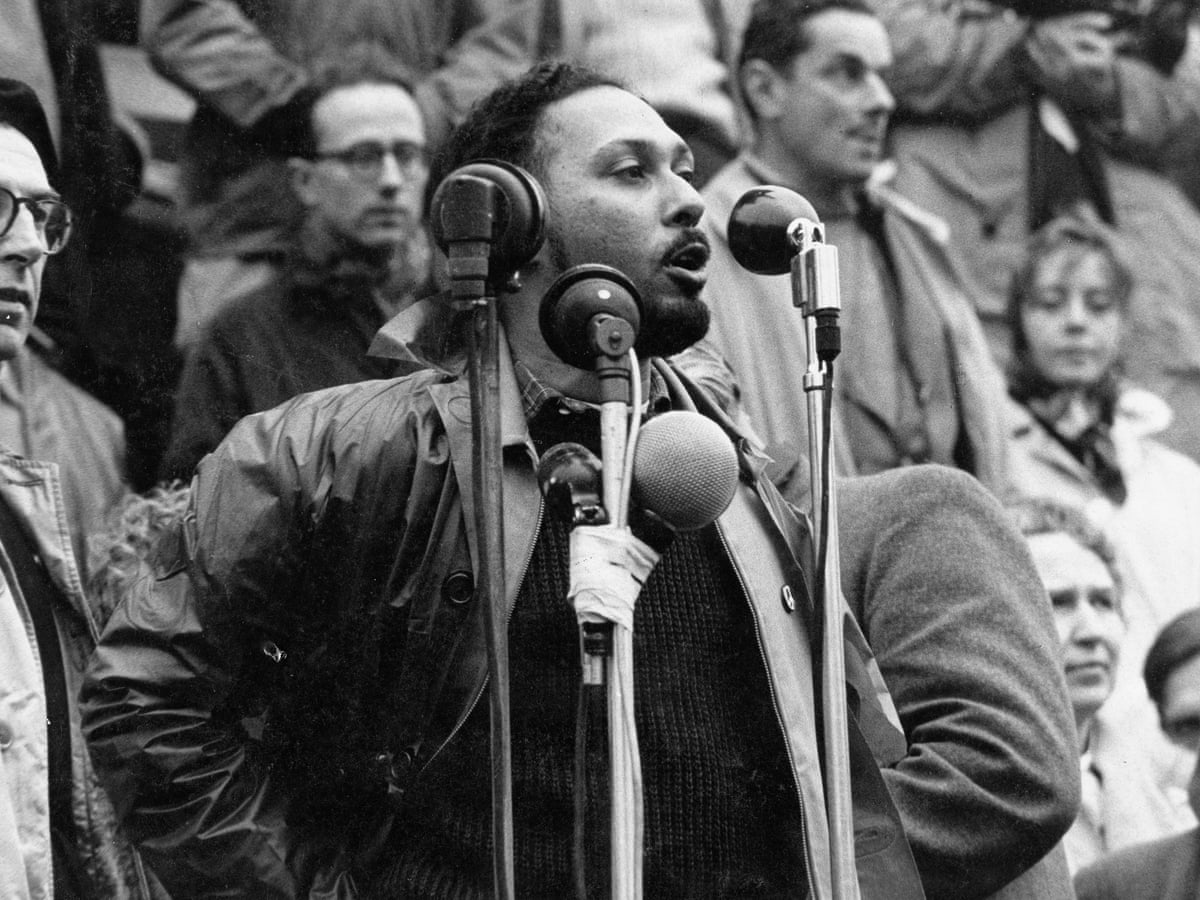
Maybe most influential theorist of British cultural studies
his trajectory reflects that of 20th century theorists:
from the New Left of 1960’s to engagement with poststructuralism in the 1970s to cultural politics of 1980s and 1990s
British New left: from sole economic factors to more complex understanding of people’s allegiances, attitudes and beliefs
Interested in popular culture (as [[Raymond Williams]], also participated in the formation of British cultural studies)
worked at different universities, lastly at Open University. Collaborative work was the norm.
charismatic teacher, inclined to the essay rather than the book form.
dialogic and multivoiced inception of cultural studies. a discipline that is always deconstructing itself.
wariness of codification of cultural studies, but some principles can be identified:
commitment to the political relevance of intellectual work
theoretical need for alternatives to Marxism’s limitations
analysis of the hegemonic practices that bound social groups to dominant social forms (institutionally, intellectually, economically, emotionally)
analysis of forms of resistance to those practices
because hegemony is omnipresent, anything can be an object of study
has adapted any methodology from other disciplines deemed useful
had often focused on popular culture
the absence of a particular methodology does not mean cultural studies lack a theory
Hall’s essays provide a comprehensive theoretical overview:
processes of identity formation are central
concepts of conjuncture (everything exists simultaneously amid specific historical forces and specific determinant structures) and articulation (these elements in any conjuncture and the relations among them are articulated differently at different times and places. Social groups work to make their articulation prevail)
social field as dynamic site of contending forecast
identity is always being constituted by norms, institutions and subject positions
No dominant order can provide a permanent, seamless vision
interactions between mainstream norms and marginalized groups
linking literary theory’s understanding of the production of meaning and interpretation of texts with social theory’s delineation of conflicting forces within the social field
Adaptation of Gramsci’s conception of hegemony and uses it to provide a dynamic panorama of ongoing struggles of all members of society
also desire for intellectuals to connect to these political struggles
Also engagement with Foucault:
power dispersion throughout society
processes of subject formation
power/knowledge produced by intellectual discourses
" Let me put it this way: you have
to be sure about a position to teach a class, but you have to be open-minded enough to know that you are going to change your mind by the time you teach it next week.”
Theoretical work as struggle: in the case of Marxism, struggle with its limitations and work with its questions
Gramsci was addressing unanswered questions of Marxism: the nature of culture, the conjunctural, the importance of historical specificity, hegemony, ensemble and blocs to think questions of class.
He also proposed "the production of organic intellectuals", and that is what cultural studies aim at
work for a type of relationship in a conjuncture
they must be at the forefront of intellectual work. they must know more than traditional intellectuals. no theoretical limits from which cultural studies can turn back
they must transmit their knowledge to those who do not belong to the intellectual class professionally
so, theory and practice combined
theoretical work that must go on and on, live with the tension btw theory and practice
2 theoretical movements which interrupted it in its formation (metaphor of theoretical work as interruption):
around feminism: reorganized the field:
the personal as political: changed the object of study
expansion of the notion of power
gender and sexuality in relationship to power
subjectivity and subject
social theory and psychoanalysis
around race:
movements provoke theoretical movements
The linguistic turn shook the path of cultural studies
discovery of discursivity and textuality
structuralist, semiotic and poststructuralist work
culture through the metaphor of language and textuality
delay, displacement always implied in the concept of culture
culture will always work through textuality… and at the same time textuality is not enough. That tension is essential to cultural studies,
what is the point of cultural studies in front of terrible tragedies such as AIDS?
this tension is something the cultural studies theorist must feel
however AIDS is not just a matter of people dying, but also about representation, effects of language, textuality as site of life and death
Institutionalization of British cultural studies and American cultural studies:
rapid in the US when compared to the British
institutionalization in Britain seen as a danger
how should the cultural studies field be defined according to the metaphors he has laid out
Those who have studied the 1935 Harlem riot say that while the underlying issues in the neighborhood spoke to deep systemic inequality, it was the perceived disregard and devaluation of the black body, and of black life, that called forth the rage that enveloped the black men and women of Harlem on that day. (Location 449)
At some point in high school, my best friends and I all had a running joke about “the talk,” which most of them had been given by a father or mother or some other relative. The underlying theme of this set of warnings passed down from black parents to their children is one of self-awareness: the people you encounter, especially the police, are likely willing to break your body, if only because they subconsciously view you not only as less than, but also as a threat. (Location 1114)
The role of the press in the civil rights movement also points to our larger failure as a nation to validate and trust the black experience. Why did it take white reporters writing for white audiences to finally address the inequities that black communities had for decades been fighting? Was the lens of whiteness required for the nation to accurately recognize the black experience? (Location 2245)
But the protest chants were never meant to assert the innocence of every slain black man and woman. The protests were an assertion of their humanity and a demand for a system of policing and justice that was transparent, equitable, and fair. (Location 2852)
What are your favorite short(ish) sci-fi novels & short stories? I’d consider anything below 100k words/300pp/8h at 1x speed audio short enough to qualify, but all things equal the shorter the better. ([View Tweet](https://twitter.com/catehall/status/1608744994474725377 ))
Proposal for a DAO:
Buy all the top journals from Elsevier, Taylor & Francis, Wiley-Blackwell, Springer, & Sage, and make everything open access immediately and permanently
Governance tokens decide which journals we prioritize for purchase
You in? ([View Tweet](https://twitter.com/dmcdougall/status/1461276221761859586 ))
Great interview. Touches on how local [[community organising]] can be the way to get working class communities involved in climate related issues. Where the intersection is people, planet and pocket.
Terry makes lots of references to various community groups that I’d like to listen to again and make note of - practical insights into what works on the ground. One was something like a local reduce, reuse, recycle hub.
the share of young people who own a business has fallen by two-thirds since the 1980s. (Location 77)
the average pretax income of the top tenth of Americans has doubled since 1980, that of the top 1 percent has more than tripled, and that of the top 0.001 percent has risen more than sevenfold—even as the average pretax income of the bottom half of Americans has stayed almost precisely the same. (Location 83)
Those raised near the top of the income ladder now have a 70 percent chance of realizing the dream. Meanwhile, those close to the bottom, more in need of elevation, have a 35 percent chance of climbing above their parents’ station. (Location 90)
Rich American men, who tend to live longer than the average citizens of any other country, now live fifteen years longer than poor American men, (Location 92)
There is no denying that today’s elite may be among the more socially concerned elites in history. But it is also, by the cold logic of numbers, among the more predatory in history. (Location 132)
“If we want things to stay as they are, things will have to change.” (Location 164)
We must ask ourselves why we have so easily lost faith in the engines of progress that got us where we are today—in the democratic efforts to outlaw slavery, end child labor, limit the workday, keep drugs safe, protect collective bargaining, create public schools, battle the [[Great Depression]], electrify rural America, weave a nation together by road, pursue a Great Society free of poverty, extend civil and political rights to women and African Americans and other minorities, and give our fellow citizens health, security, and dignity in old age. (Location 190)
the top 10 percent of earners, would be making more than twice as much before taxes as a similarly situated person in 1980. If Cohen entered the top 1 percent of earners, her income would be more than triple what a 1 percenter earned in her parents’ day—an average of $1.3 million a year for that elite group versus $428,000 in 1980, adjusted for inflation. On the narrow chance that she entered the top 0.001 percent, her income would be more than seven times higher than in 1980, with a cohort average of $122 million. The study included the striking fact that the bottom half of Americans had over this same span seen their average pretax income rise from $16,000 to $16,200. One hundred seventeen million people had, in other words, been “completely shut off from economic growth since the 1970s,” (Location 269)
That ideology is often called neoliberalism, and it is, in the framing of the anthropologist David Harvey, “a theory of political economic practices that proposes that human well-being can best be advanced by liberating individual entrepreneurial freedoms and skills within an institutional framework characterized by strong private property rights, free markets, and free trade.” (Location 302)